High school students interested in truly quality research opportunities do not need access to a hospital laboratory to ask a meaningful health or medical research question. Strong research projects can begin with public gene-expression records, health estimates, medical images, or environmental measurements, especially in a summer research program. The best topic for students interested in gaining biomedical research experience is a focused question you can answer responsibly with the available time, skills, and supervision. This is best done through a research program or internship to ensure the correct guidance and help you achieve IEEE-level results.
Start with one population, exposure, outcome, or biological mechanism. Identify an accessible dataset and the method needed to answer the question. Name the variables, comparison groups, evaluation measure, and major limitation before analysis. Public, de-identified data are often practical because they avoid recruiting patients, requiring hands-on research, or handling private records.
These ideas range from descriptive analysis to machine learning. Originality can come from a new comparison, population, feature set, time period, or validation method. Difficulty assumes a research program mentor or teacher can check study design and interpretation.
Whether utilizing a summer program, long-form research internship program, or independent research, the question you start with makes all the difference. Here are just a few ideas to get interested high school students started on their research training journey.
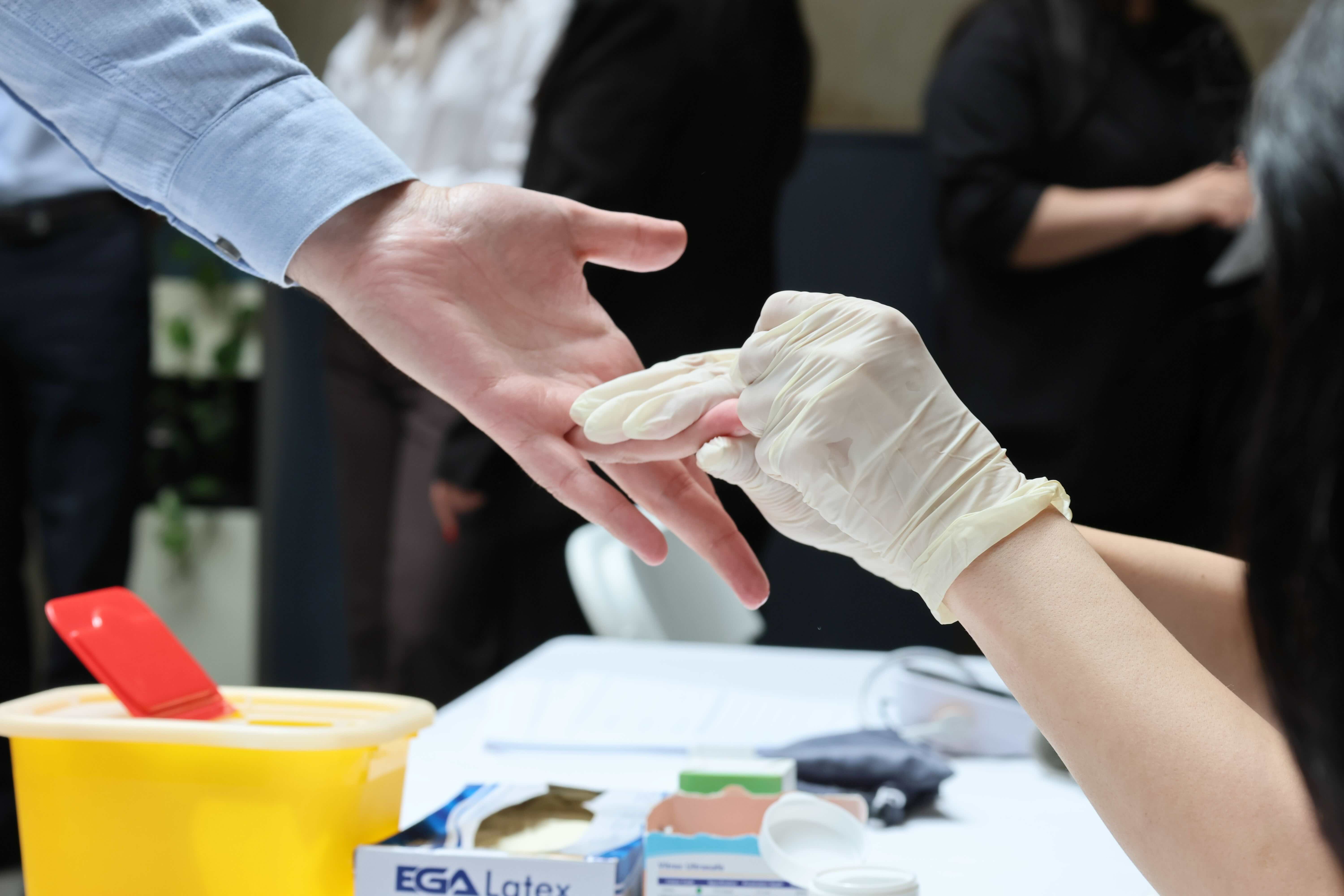
Question: Which community characteristics are associated with differences in a specific health outcome, such as asthma, diabetes, or preventive screening? CDC PLACES provides modeled local estimates at county, place, census-tract, and ZIP Code Tabulation Area levels.
Method and prerequisites: Use spreadsheets or Python for descriptive statistics, mapping, and a regression model. Compare similar geographic units and document each measure. Difficulty: beginner to intermediate.
Ethics and limits: Area-level associations do not prove that a neighborhood characteristic causes an individual’s outcome. Avoid labeling communities as unhealthy; explain uncertainty, data vintage, and possible confounding.
Question: Did mortality, heat exposure, or fine-particle pollution change differently across regions or demographic groups? CDC WONDER offers public-health query systems for deaths, population, heat, temperature, and daily fine particulate matter.
Method and prerequisites: Learn rates, denominators, age adjustment, confidence intervals, and time-series visualization. Compare trends around a defined event without claiming causation. Difficulty: intermediate.
Ethics and limits: Small counts may be suppressed or unstable. Use aggregated results, respect the system’s terms, and separate temporal correlation from causal evidence.
Question: Which genes or pathways differ between a disease group and a comparison group in a published experiment? NCBI’s Gene Expression Omnibus hosts functional genomics studies that can support a secondary bioinformatics analysis.
Method and prerequisites: Learn basic biology, R or Python, normalization, differential-expression testing, multiple-comparison correction, and pathway interpretation. Reproduce one published contrast before adding a subgroup or model. Difficulty: advanced.
Ethics and limits: For your genomics research, use datasets whose access terms permit your analysis, report sample size and tissue context, and do not treat a statistical signature as a clinical diagnosis.
Question: Can a compact model distinguish two image classes, or can an explainability method reveal when a classifier attends to irrelevant regions? Public collections from The Cancer Imaging Archive can support carefully scoped imaging studies.
Method and prerequisites: Learn preprocessing, train-validation-test separation, class imbalance, sensitivity, specificity, and area under the ROC curve. Compare a simple baseline with one improvement. Difficulty: advanced.
Ethics and limits: Preserve patient de-identification and dataset licenses. Never present a student model as a diagnostic tool. Check for patient-level leakage, demographic imbalance, and shortcuts such as scanner markings. Note absence of access to cancer research labs.
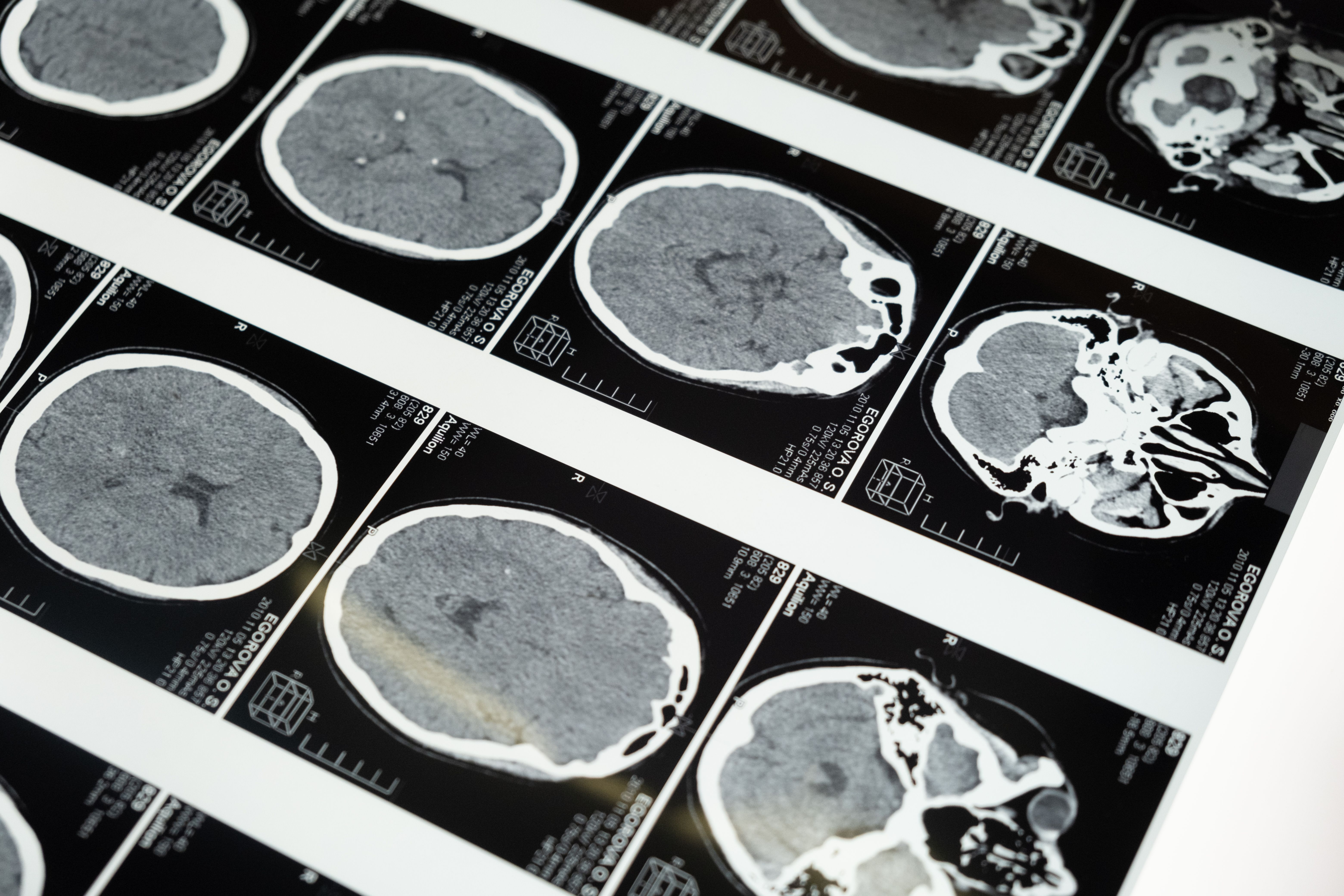
Question: How does expression of a selected gene vary across brain regions, development stages, or cell types? The Allen Brain Knowledge Platform openly shares atlases, datasets, software, and analysis tools.
Method and prerequisites: Learn neuroscience vocabulary, visualization, correlation, and anatomical matching. Compare a short, literature-supported gene list across defined regions. Difficulty: intermediate to advanced.
Ethics and limits: Brain datasets may combine species, donors, ages, and measurement technologies. Keep those distinctions visible and avoid translating an exploratory molecular pattern into a claim about a person’s behavior.
Question: Which traits share associated variants or implicated genes, and what pathways might explain the overlap? The NHGRI-EBI GWAS Catalog provides curated genome-wide association results and downloadable summary statistics where available.
Method and prerequisites: Learn alleles, effect size, p-values, linkage disequilibrium, population descriptors, and enrichment analysis. Limit the project to one trait pair and validate against original studies. Difficulty: advanced.
Ethics and limits: Association is not destiny or proof of mechanism. Population representation matters, and findings should not be used to predict an individual’s health.
Question: Do changes in PM2.5 or ozone track with a public health measure across places or seasons? EPA AirData provides historical outdoor-monitor data, downloads, reports, and visualizations.
Method and prerequisites: Combine monitor data with a public outcome source, define geographic and temporal matching, and account for weather or season. Start with visualization and a transparent regression baseline. Difficulty: intermediate.
Ethics and limits: Monitor coverage varies, exposure at a monitor is not personal exposure, and an ecological association is not individual-level causation. Describe missingness and spatial mismatch directly.
Question: Did a policy change coincide with a change in insurance coverage, preventive care, or another population measure? Use a public government dataset and a clearly documented implementation date.
Method and prerequisites: Learn comparison-group selection, interrupted time series, or difference-in-differences. Justify the comparison and test pre-policy trends. Difficulty: intermediate to advanced.
Ethics and limits: Policies occur alongside economic and social changes. Frame the result as evidence under stated assumptions, not a universal verdict. Avoid political advocacy that outruns the analysis and research findings.
Public data does not make every biomedical research project exempt from oversight purely because there is no firsthand clinical research occurring. Society for Science treats surveys, identifiable private information, participant interaction, and some app testing as human-participant research. Its ISEF rules require approval before recruitment or data collection, with consent or assent and parental permission for minors. Public preexisting datasets without interaction may qualify for an exemption.
If your idea involves patients, records, biospecimens, surveys, interviews, or app testing, pause before collecting anything. Work with a qualified adult and the relevant review process. A systematic review, simulation, or public-data analysis can often answer an important question safely.
Biomedical research joins technical analysis with consequential interpretation. A mentor can help students interested in biomedical research to match the dataset to the question, choose a defensible baseline, prevent data leakage, and distinguish correlation from causal evidence. Unexpected findings may reveal a coding mistake, weak design, or more interesting question, and the right mentorship can catch this in a way that independent research may not.
Our one-on-one research program for high school students can turn “I want to do cancer research” into a bounded imaging, genomics, or epidemiology question with an achievable method and honest contribution.
Yes, independently, as a research internship, or with a research program. Bioinformatics, secondary analysis of public-health data, medical-imaging computation, systematic reviews, and simulations can all support original questions without unsupervised wet-lab or clinical work. The project still needs a precise question, appropriate supervision, and careful validation.
A community-health or environmental-health comparison is often accessible with spreadsheets, visualization, and basic statistics. Choose one outcome, a few locations, and a clear limitation before adding complexity.
No. Fully public, preexisting, de-identified data may reduce human-participant requirements, but the dataset’s terms and your fair or institution’s rules still control. Surveys, identifiable data, participant interaction, and some app testing require review before data collection.
Originality can come from a new comparison, subgroup, validation method, feature set, or combination of compatible sources. It should not come from making a larger claim than the data supports. A focused replication plus one justified extension can be more valuable than a complicated but poorly tested model and presents an opportunity for high school students to learn quality over quantity.
It depends. Spreadsheets may handle a small descriptive study; gene-expression, imaging, and GWAS projects usually require R or Python. Learn only the tools your research project needs, particularly given the more limited scope of independent research.
At Echelon Scholars, we help high school students narrow broad interests into testable questions, develop the right research skills, and work through analysis and revision. High school junior Dhiren Deshpande, a recent alumni of our research program, developed a lightweight dual-attention model for classifying pulmonary nodules in CT scans, then improved it over fifteen months before IEEE conference acceptance. Your project should use the same careful scope and sustained iteration.
If Echelon feels too in-depth, there are other research programs for high school students which can be lower-stakes. What's important is that you find the avenue that will provide you with real-world research experience and research training that yields real results.
Echelon Scholars is a research program designed for high schoolers with graduate-level mentors from Harvard, Stanford, and UC Berkeley. Our alumni have published their own research findings at a PhD level. Our editorial team covers academic enrichment, research opportunities, and college preparation.