A summer spent testing biological hypotheses, building mathematical models or programming a working system can help you discover which STEM questions genuinely hold your attention. The COSMOS summer program gives California students that opportunity through intensive study on a University of California campus.
Your cluster determines much of the COSMOS experience, from the techniques you practice to the projects you discuss with classmates. At Echelon Scholars, we encourage students to connect those choices to specific interests and skills. Thoughtful preparation makes it easier to explain what you want to investigate and how you are ready to contribute.
COSMOS, the California State Summer School for Mathematics and Science, is a four-week residential STEM summer program. Its academic clusters pair two math and science courses with science communication. UC faculty and researchers teach through lectures, lab work, field trips and related projects.
It is a pre-college STEM program for high school students, and it offers the chance to study advanced topics in science and mathematics alongside working researchers. Clusters cover different STEM topics, so your choice points you toward particular STEM fields.
Advanced coursework builds the concepts and methods needed to approach a problem. A team research project gives you practice combining those methods, dividing responsibilities and explaining results. Research exposure develops your understanding of how researchers frame questions and test ideas. The particular balance depends on the cluster, so look closely at its activities and final output.
A useful distinction is how much of the question students help define. Following a structured laboratory exercise builds technique; deciding which comparison to run adds practice in investigation. In a team project, explain your own contribution clearly, whether you collected observations, wrote code or interpreted a result.
COSMOS operates on six UC campuses: UC Davis, UC Irvine, UC Los Angeles (UCLA), UC Merced, UC San Diego and UC Santa Cruz. Students apply to one campus in the UC system and can identify a first-choice and second-choice cluster there. A COSMOS student spends the four weeks in one cluster, and individual clusters can impose additional selection rules, including first-choice-only status.
Each UC campus publishes its own cluster list and prerequisites, so start with the work you want to do. A student who enjoys microscopy may prefer laboratory-centered biology, while someone interested in explaining biological patterns mathematically may prefer modeling. Compare the required courses with your transcript before deciding. Three of the clusters below are at UC Davis, and the examples show how different the academic preparation can be.
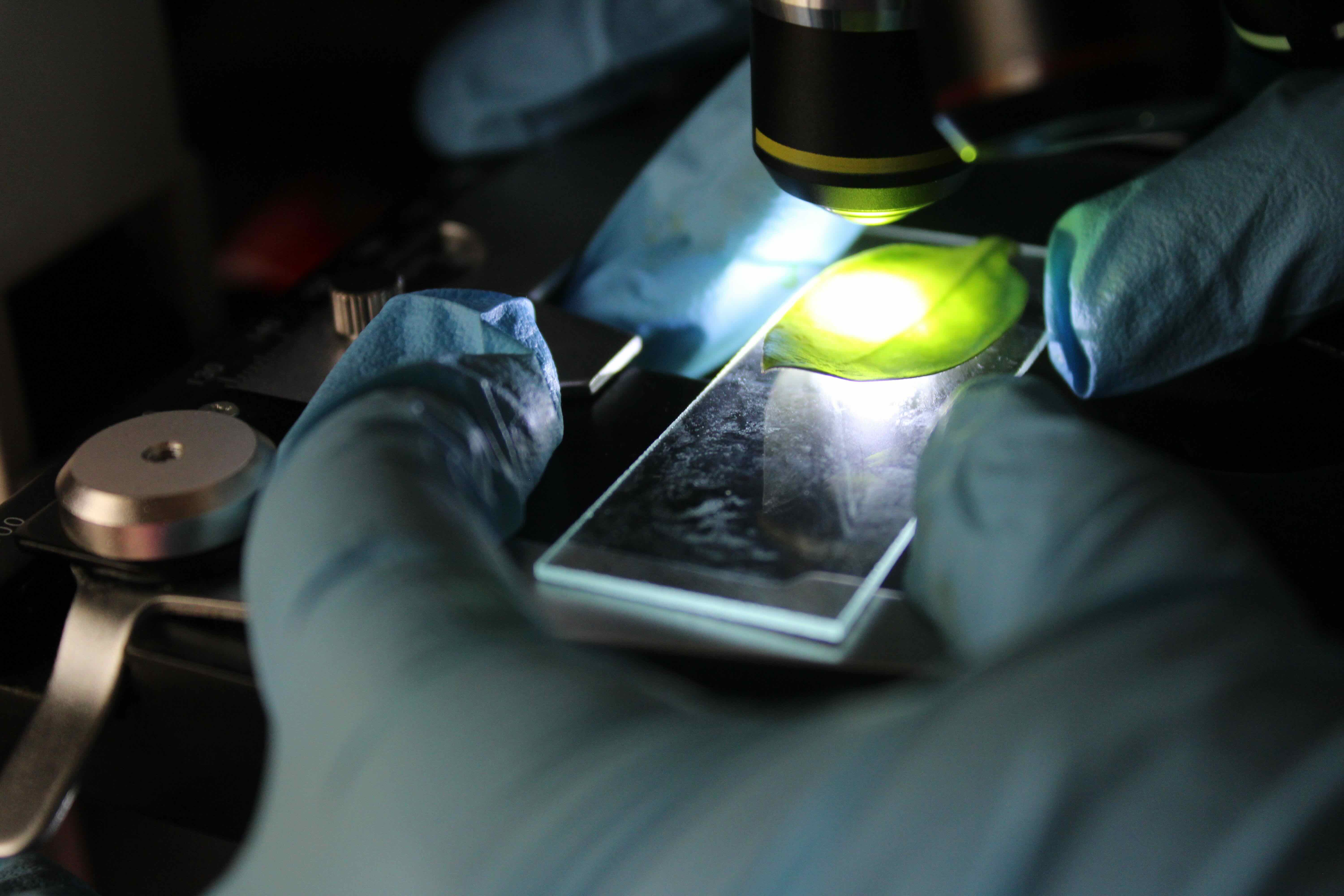
In Introduction to Plant Microbiology, students investigate microbes associated with plants, formulate and test a hypothesis, and present findings through a scientific poster and presentation. There are no formal prerequisites, although biology and laboratory experience are strongly recommended. This offers a concrete route into questions about plant health and microbial interactions.
The Mathematical Modeling of Biological Systems cluster explores subjects such as ecology, epidemiology and physiology using mathematics and programming. Algebra II, Integrated Math III or an equivalent course is required; precalculus is recommended. Prior programming experience is not required, but students should be willing to learn it.
The Tissue Engineering and Regenerative Medicine cluster connects biology and chemistry with engineering approaches to restoring tissue function. Students must have completed Algebra II or Integrated Math II and one year of high school biology. Honors or AP Biology is preferred where available. This cluster is first-choice only.
The Introduction to Machine Learning cluster covers data exploration, predictive modeling and performance evaluation through coding projects. It requires Algebra II or Integrated Math II and programming experience, preferably Python. Its sample code offers a useful readiness check: can you follow how a program measures distances and selects a nearby data point?
COSMOS is only open to California high school students. For 2027, eligible applicants are students entering 9th grade in the fall through those entering 12th. Attending high school in California does not by itself establish eligibility, and unusual residency or schooling circumstances should be resolved with the statewide office. Previous COSMOS participants cannot attend again. Students attending COSMOS must live in the program's campus housing for the duration of the program.
The application includes a personal statement, cluster-interest responses, academic records, teacher recommendations and parent or guardian electronic signatures. One recommendation is required, and two are strongly recommended. At least one must come from a STEM teacher. Choose someone who can describe how you learn, respond to challenges and contribute in class, and give them the deadline well in advance.
Upload unofficial transcripts generated after applications open. Current eighth- and ninth-grade applicants also need their seventh- and eighth-grade report cards, respectively. Ask your school how to obtain these records before that window opens, and give your recommender your selected cluster descriptions so they understand the academic context.
The COSMOS program runs July 5–31. Applications open January 6 at 8 a.m., and the deadline is February 5. The published closing time is 5 p.m., with unsupported online submissions accepted until 11:59 p.m. Submit before the 5 p.m. support cutoff so you can address problems while help is available. Admission notifications are scheduled for March 25.
The 2027 residential program costs $5,793, including housing, meals, orientation, activities and on-site support. Need-based financial assistance depends on verified household circumstances and available funding. Applying for aid does not affect admission to COSMOS. Families requesting assistance should complete the financial-aid portion alongside the admission materials.
Choose one experience that reveals how you think. For illustration, a student considering biological modeling might describe changing a parameter in a population simulation, noticing an unexpected result and investigating why it occurred. That account connects a real action to a question the student wants to pursue. Use your own experience and distinguish work you completed from work you hope to learn.
For each cluster response, connect three elements: a specific topic in the curriculum, something you have already explored and a skill you want to develop. A biology student might connect a classroom microscopy exercise to an interest in plant-associated microbes. A programming student might explain why comparing model errors became more interesting than simply getting code to run.
The COSMOS application guidance asks students to explain their interests, experiences and goals in their own voice. Write a clear first draft, then ask a teacher or mentor whether the connection to your chosen cluster is specific. Revise vague claims into examples. Keep your explanations understandable to a reader who has never seen your project.
Preparation can also include a small, well-documented technical exercise. For a computing cluster, practice explaining a short program and testing it with different inputs. For biology, revisit experimental controls and how evidence supports a conclusion. Keep notes about what changed after feedback; those details can make both your essays and later scientific discussions more precise.
If you want sustained support for an original investigation, our research mentorship at Echelon Scholars provides unlimited-hour, one-on-one guidance, technical iteration and detailed manuscript feedback. We help students move from an initial interest to a focused question, defensible analysis and a paper prepared for peer review. That work develops skills that extend beyond a summer application and into your college application.
If a student's research is not accepted by a peer-reviewed, postgraduate-level journal or conference, we continue mentorship and publication support at no additional tuition cost until acceptance. For students ready to commit to that process, explore our admissions process and the preparation we look for in prospective researchers.
Participating in COSMOS does not require prior research. Your cluster's prerequisites matter more directly. Classroom experiments, programming practice and thoughtful independent learning can give you useful experiences to discuss. A mentor can help you deepen those skills and explain your work clearly.
No. You apply to one campus per cycle, with first- and second-choice clusters at that campus. Make both choices academically meaningful, while observing any first-choice-only restrictions.
There is no reliable universal easiest-cluster ranking. Match your preparation to the stated prerequisites and the work you genuinely want to undertake. An application built around specific interests gives you a stronger explanation of fit than speculation about applicant numbers.
No. Requirements vary substantially across different clusters. The plant microbiology cluster has no formal prerequisites, while the machine-learning cluster requires programming experience. Biological modeling uses programming but welcomes students who are ready to learn it during the program.
About Echelon Scholars:
Echelon Scholars is a research mentorship program that pairs students with graduate-level mentors from Harvard, Stanford, and UC Berkeley. Our editorial team covers academic enrichment, research opportunities, and college preparation.