Hospital volunteering and medical research can both deepen your understanding of medicine, but they develop different skills. Volunteering is best for learning how care settings operate, serving patients and families in an appropriate nonclinical role, and testing whether you enjoy the human side of health care. Research is best for investigating a focused question, learning scientific methods, and creating an evidence-based output under qualified supervision.
Choose the activity that matches your current goal, access, and available time. A thoughtful combination can be valuable when each commitment has a distinct purpose and you can meet both responsibilities consistently.
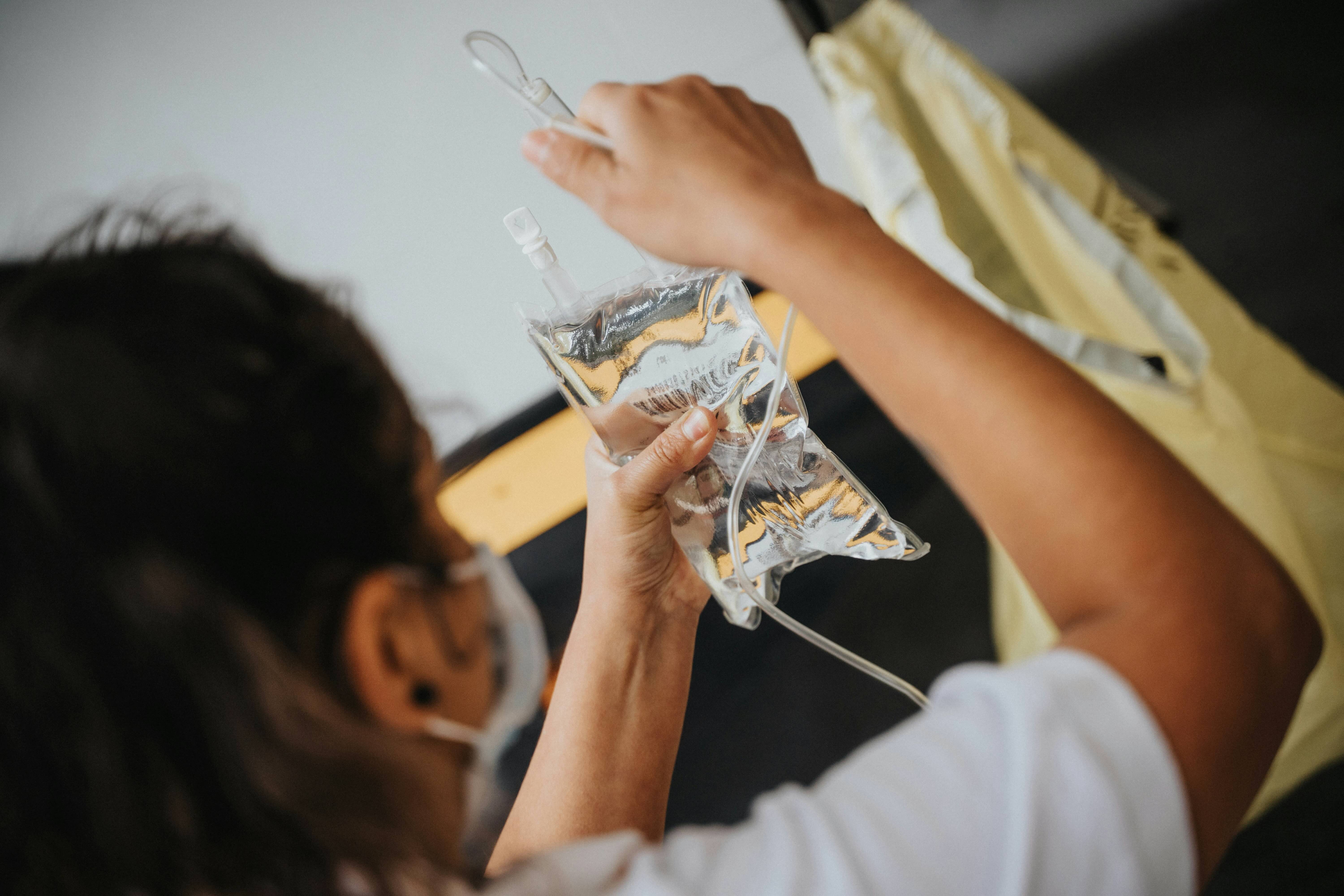
Hospital volunteers support the institution rather than provide medical care. Depending on the hospital and your age, you might greet visitors, help with wayfinding, restock approved supplies, assist at a welcome desk, or support nonclinical programs. These roles can build reliability, communication, situational awareness, and comfort in a professional health-care environment.
Each Spring, Google sees a spike in "medical volunteer opportunities for high school students near me" as students clamor to get first-hand, in-hospital experience over the summer. However, it is important to realize that these roles are strictly limited. A volunteer badge does, of course, not make a student a clinician, and most hospitals will not allow minors to perform procedures, access protected records, or independently interact with patients in sensitive situations. Programs may also require health screening, background checks, orientation, and a minimum commitment. Inova’s high school volunteer program, for example, requires students to be at least 16 by the session start. RWJ University Hospital’s teen program serves students ages 15 to 18 who have completed ninth grade and asks for a 100-hour annual commitment, usually in weekly shifts.
For this reason, medical volunteer opportunities for high school students expect much but offer limited return in terms of action. This kind of structure is useful when your main question is, “Do I enjoy showing up for people in a care setting?” Volunteering can reveal how staff coordinate, how families navigate a hospital, and how small acts of service affect an experience. It offers exposure to the environment, not permission to diagnose, treat, or claim clinical competence.
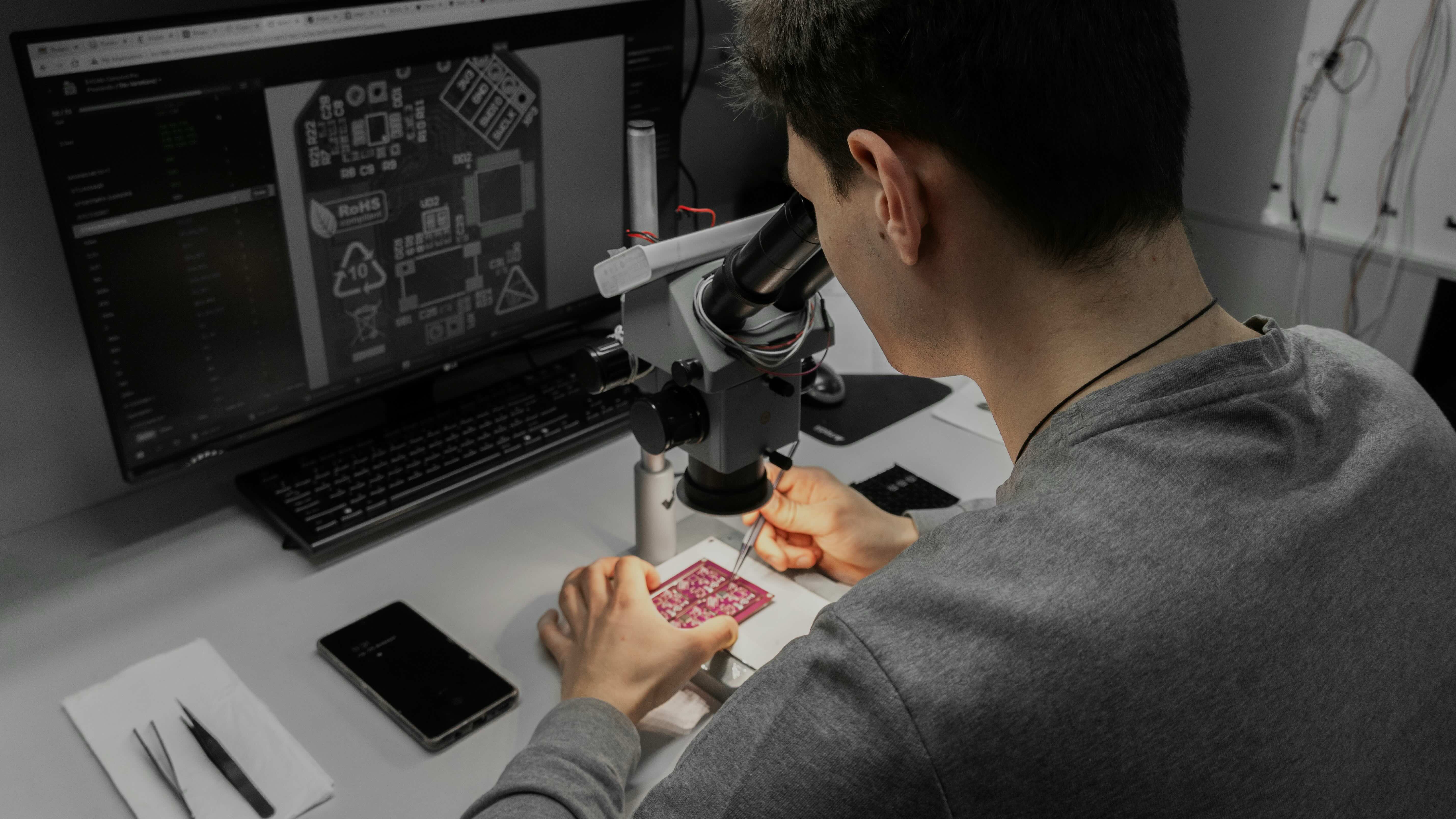
Medical research begins with a question that can be investigated responsibly. A high school project might analyze a public health dataset, review evidence about an intervention, build a computational model, or study a biological mechanism in a supervised laboratory. The work can produce a research plan, literature review, cleaned dataset, code, poster, manuscript, or presentation, depending on the project and its stage.
The core skills are different from volunteering. You learn to define a feasible question, evaluate sources, choose methods, document decisions, interpret uncertainty, and revise your work after feedback. At Echelon Scholars, our graduate-level mentors help students shape ambitious ideas into manageable projects, develop technical skills, and improve their work through detailed feedback and continued support.
Projects involving people, identifiable health information, or clinical settings require additional safeguards. Society for Science’s human-participant rules require appropriate review before recruitment or data collection for covered student projects. HHS research privacy guidance explains how health information may be used and when authorization, de-identification, or institutional review is required. For many beginners, a public or properly de-identified dataset is a more realistic path than attempting direct patient research.
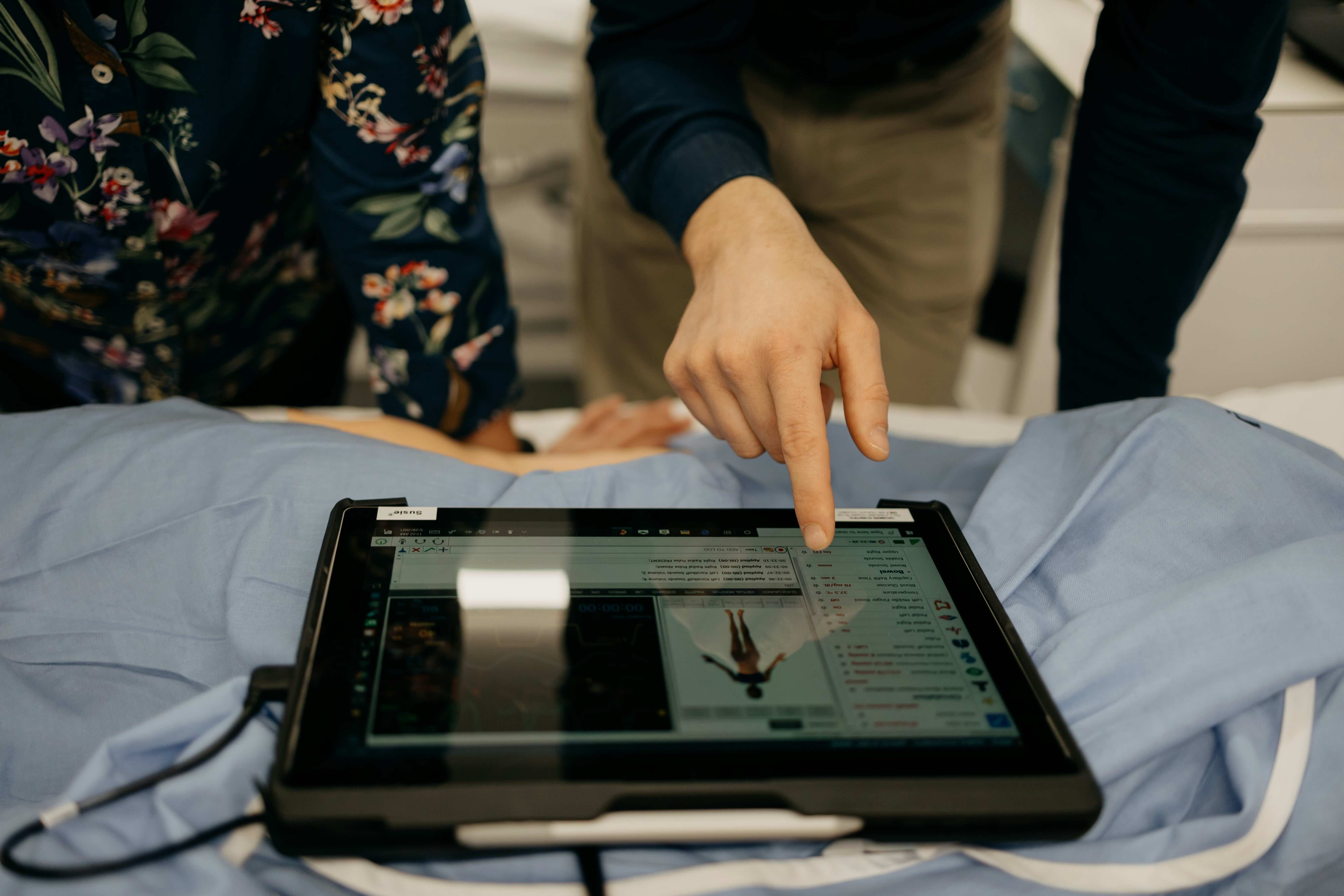
Choose hospital volunteering when you want to contribute through service and understand the daily environment around patient care. Choose medical research when you want to answer a scientific question and develop analytical or experimental skills. Neither activity is automatically “better,” and neither should be presented as a shortcut to college or medical school.
Volunteer access is controlled by the hospital. Age rules, shift availability, health requirements, and permitted duties determine what you can do. Research access depends on the project. A literature or data project may be possible online, while wet-lab work requires facilities, safety training, and close supervision. For example, finding Stanford Medical School research opportunities as a high schooler is both an extremely competitive process and generally limited to brief summer experiences. Human-participant and patient-data projects add ethical and privacy requirements that must be addressed before the work begins.
Volunteering often rewards steady attendance over many weeks. Research time is less uniform: reading and analysis may fit around school, while experiments can require fixed blocks and repeated trials. In either case, choose a commitment you can sustain. A modest weekly schedule completed reliably is stronger preparation than an overloaded plan that you cannot finish responsibly.
Volunteering develops service habits, professional communication, and familiarity with health-care systems. Its primary output is the service itself, along with a clearer understanding of the people and operations around care. Research develops question formation, source evaluation, technical methods, analysis, and scientific writing. Its outputs document what you investigated and learned.
Combining the two can make sense when they answer different questions for you. Consider this illustrative path: a student volunteers one afternoon each week in hospital wayfinding while completing a supervised analysis of a public respiratory-health dataset. The volunteer role builds service experience and familiarity with the care environment. The research project develops data analysis and scientific reasoning. The student does not use volunteer access to obtain records, recruit patients, or blur the boundary between service and research.
A combination is less useful when it creates scheduling conflicts or encourages superficial participation. Before adding a second activity, confirm that you can meet the first program’s attendance rules and give the research enough uninterrupted time. If your schedule is limited, complete one meaningful commitment now and add the other later.
Start with one decision when looking at premed extracurriculars in high school: what do you most want to understand by the end of this semester? If you want to learn how you respond to patients, families, and health-care teams while contributing within clear boundaries, investigate local volunteer requirements. If you want to explore why a health outcome occurs or how evidence can improve a decision, define a researchable question and identify the supervision, data, and methods it would require.
Then verify practical fit. Check minimum age, application timing, transportation, weekly hours, training, and any health or background requirements for volunteering. For research, confirm mentor availability, project feasibility, data access, safety or ethics review, and the form of the expected output. Our guide to medical and health science internships for high school students can help you explore structured opportunities, while our medical research portfolio guide explains how to organize projects, presentations, and evidence of your work.
If research is the stronger fit, Echelon Scholars can help you move from an initial interest to a focused, technically sound project. Review our FAQs for program structure and eligibility, then explore admissions when you are ready to discuss timing and fit. A clear purpose will make either path more rewarding—and will help you explain what you genuinely learned without overstating your responsibilities.
Hospital volunteering can provide exposure to a clinical environment, but most high school volunteer roles are nonclinical. Students usually support service or operational needs and must stay within the hospital’s age, privacy, safety, and supervision rules.
Not necessarily. Many high school medical research projects use published literature, public datasets, computational methods, or laboratory models. Research involving people or identifiable health information requires appropriate oversight, consent or privacy protections, and institutional approval before the work begins.
The better choice depends on the skill you want to build. Volunteering is a strong fit for service, communication, and learning how care settings function. Research is a strong fit for scientific reasoning, technical methods, and producing an evidence-based project. Neither activity guarantees an admissions outcome.
Yes, if the schedules are realistic and the roles remain distinct. Protect fixed volunteer shifts, reserve focused research time, and never use volunteer access for research recruitment or patient information. If one commitment begins to suffer, narrow the plan rather than completing both superficially.
No. A student can begin with a focused question, foundational reading, and a feasible method. Qualified mentorship is especially useful when you need help narrowing scope, choosing appropriate tools, interpreting results, and revising the final work.
About Echelon Scholars: Echelon Scholars is a research mentorship program that pairs high school students with graduate-level mentors from Harvard, Stanford, and UC Berkeley. Our editorial team covers academic enrichment, research opportunities, and college preparation.