At Echelon Scholars, we are committed to the highest level of excellence and believe our results speak for themselves. Our structure, admissions process, one-to-one mentorship, publication record, continued-support guarantee, student reviews, and University of San Diego Credit Validation pathway are all meant to provide peace of mind and confidence in how we come through for our selected Scholars.
Echelon is built for students who want to conduct original research and develop it toward submission to a peer-reviewed, postgraduate-level journal or conference. It is not a short enrichment class or a paper-writing service. Students remain responsible for understanding, conducting, and writing their work, while mentors provide individualized technical instruction, feedback, accountability, revision support, and publication guidance.
We have carefully built our program to contain all you should expect from a serious research mentorship program: a selective application and interview process, a defined academic model, identifiable mentors, clear tuition and financial-aid information, published student outcomes, public reviews, a written continued-support commitment, and a documented relationship with the University of San Diego Professional and Continuing Education division.
Several kinds of evidence are especially useful:
Together, these records show an operating program with a defined service, real academic outputs, identifiable people, and externally verifiable components.
Echelon Scholars is a selective, high-touch research program focused on helping high school students complete original work and progress toward publication in peer-reviewed, postgraduate-level venues. Students receive individualized, one-to-one mentorship rather than moving through one standard project or a fixed set of group lessons.
Our program focuses specifically on interdisciplinary research that can sustain rigorous technical or analytical research, including artificial intelligence and machine learning, data science, molecular biology, statistics, applied mathematics, biomedical research, and medical research. While other fields can be pursued, we always include a technical aspect to remain competitive at the higher level of venues. The exact topic and mentorship structure is curated to the student’s interests, prior preparation, project scope, available data, and mentor fit.
We exclusively target PhD-level research, which is more rigorous, technical, and competitive at the highest level venues like IEEE and ACM.
The process begins with an application. Strong candidates may then be invited to a live interview, after which we will request additional supporting materials (report cards, ACT/SAT scores, etc.) and ultimately issue an admissions decision. Prior research experience is not required. Our program looks for motivation, curiosity, integrity, teachability, and the willingness to sustain effort through a project that may involve difficult technical work and multiple rounds of revision.
Our selectivity as a program is directly connected to the program model itself. Publication-centered research requires a student to engage seriously with scholarly literature, complete weekly work, respond to feedback, and remain involved when experiments or submissions need another iteration.
The unique Echelon Scholars mentorship model is its central strength. One-to-one mentorship offers customization, self-ownership, individual attention, flexibility, and deep access to a researcher who can respond to the specific needs of the project. Instead of limiting every student to the same number of sessions, Echelon offers unlimited-hour mentorship and publication support, meaning there is no fixed cap on the help provided through the research and submission process.
Support is organized around the work the project requires. Meeting frequency and project needs can vary, but the mentorship can include literature review, methodology selection, coding or analytical instruction, experimental design, interpretation of results, manuscript feedback, internal review, venue selection, submission preparation, reviewer-response strategy, presentation preparation, and resubmission planning.
The student also always retains intellectual ownership of the research. Students are expected to conduct the analysis, understand their methods, make decisions with mentor guidance, and write their own manuscripts. Mentors teach, question, review, and help students improve the work. This balance of close support and genuine student ownership is central to the academic value of the experience.
Projects differ by field, but a typical Echelon pathway includes the following stages:
Most students average about six months, while some complete the process sooner and others continue for more than a year. The duration depends on project complexity, student pace, technical requirements, and external venue timelines.
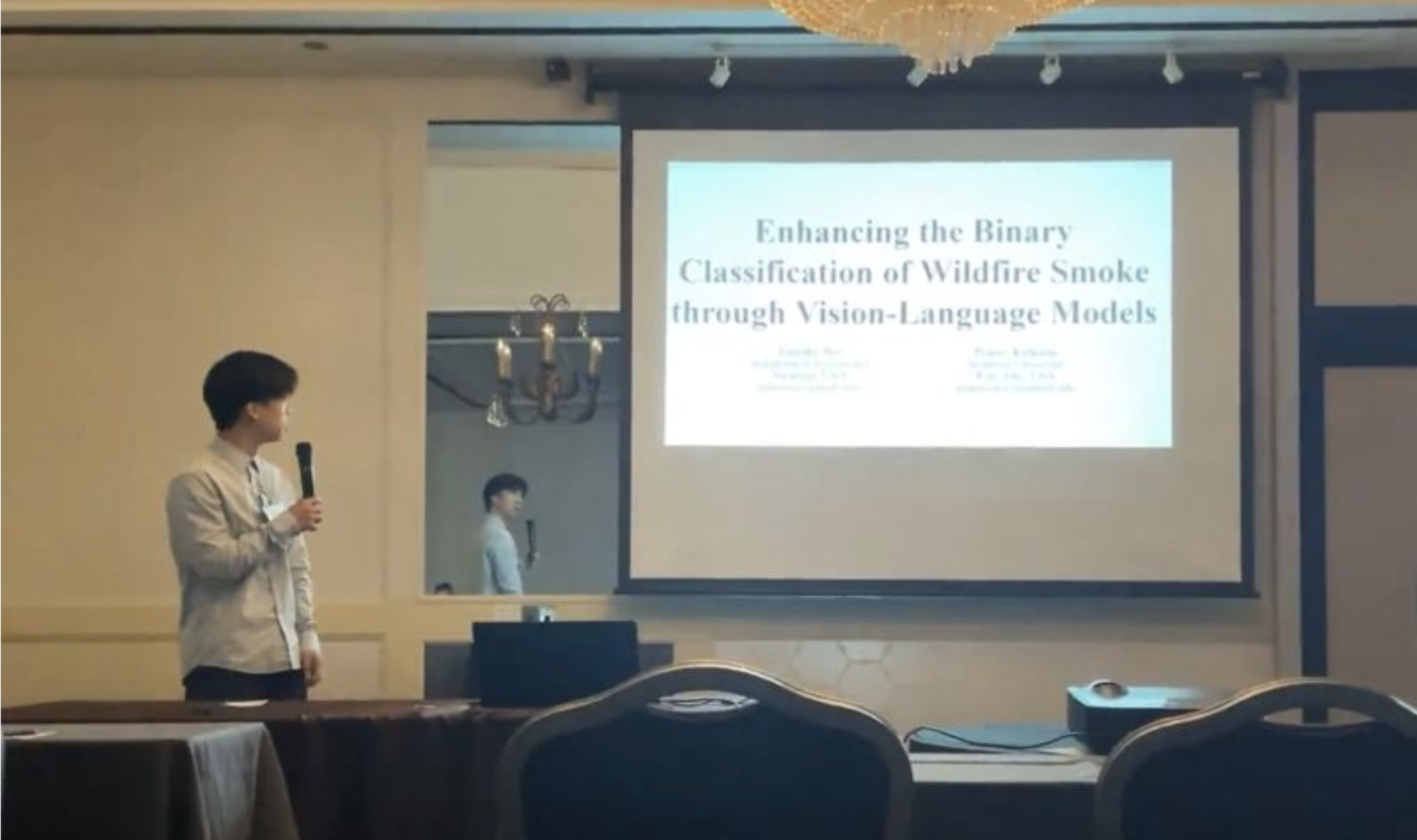
Yes. IEEE Xplore lists Hybrid Quantum-Classical Method for Bank Account Fraud Detection Using Quantum Encoding and Quantum Machine Learning, published through the 2024 IEEE MIT Undergraduate Research Technology Conference. There is also A Hybrid Approach for Drug Interaction Prediction Using Knowledge Graphs and Gradient Classifiers from the same conference, as well as A Novel Diagnosis and Prognosis Model for the RUNX1 Mutation in AML from the 2024 IEEE Conference on AI, Science, Engineering, and Technology.
Echelon has maintained a 100% historical publication success rate for its verified student cohort and its mentor and leadership page reports more than 75 peer-reviewed papers in venues such as IEEE and ACM.
If a student’s research is not accepted by a peer-reviewed, postgraduate-level journal or conference, Echelon continues providing mentorship and publication support at no additional tuition cost until it is accepted. This is a continued-support commitment that keeps the mentor and program aligned with the student through revision, resubmission, and publication strategy.
Independent journals and conferences still control their own decisions, standards, reviewer assignments, and timelines. Echelon does not choose the outcome for a venue or promise a particular publication date, but we always commit to unrelenting persistence towards the publication goal at an uncompromising academic level.
Echelon Scholars reviews are available both on our program’s website and on Trustpilot. At the time this guide was prepared, Trustpilot displayed a 4.4 TrustScore from 10 reviews, with all 10 reviews rated five stars. We are very proud of our prior Scholars and encourage you to read their reviews for yourself.
Our students and parents often touch on our close mentor involvement, steady feedback, increased confidence, genuine student ownership, development from an early research question into a formal paper, and successful submissions or publications at IEEE venues. Echelon’s own student testimonials similarly emphasize analytical growth, independence, repeated manuscript revision, technical learning, and clarity about future academic interests.

Students who successfully complete Echelon may optionally obtain 1 to 8 graduate-level extension units through the University of San Diego Credit Validation Program. The official listing is course EDC-X722AA, Methods in Novel Research, Technical Analysis, and Scholarly Writing.
The USD page describes an individualized research progression that includes literature review, state-of-the-art analysis, research-question development, technical or analytical execution, interpretation, manuscript writing, revision, internal review, and submission or presentation preparation. It estimates approximately 100 to 200 hours of total student engagement, depending on the field and project.
The current course options list fees from $79 for one unit to $632 for eight units, paid directly to USD. After the completion documentation and grade are processed, USD issues an official transcript. These are graduate-level extension units, not an undergraduate degree program, and students should confirm transfer and applicability with any receiving institution. USD does not provide Echelon’s instruction, mentors, materials, or grading.
Current tuition is $12,500, paid in two installments. Echelon offers highly competitive, need-based financial aid which may cover 10% to 50% of tuition through a supplementary application. Aid is not guaranteed.
Tuition covers the individualized Echelon research-development and mentorship process, including continued support under the Echelon Guarantee. Optional USD units are obtained separately from the university. Conference registration, travel, publisher charges, or other third-party expenses can depend on the specific venue and should be confirmed for the student’s project.
No. Echelon is transparent about its program structure and admissions process, and maintains identifiable leadership and mentors, current tuition and aid terms, published student testimonials, independent Trustpilot reviews, publisher-indexed student papers, a documented University of San Diego Credit Validation listing, and a clearly described continued-support guarantee.
The more useful question is whether Echelon’s academic goal matches the student’s goal. Echelon is designed for students who want a demanding, publication-centered research experience and are prepared to complete sustained independent work with close mentorship.
Echelon is especially well suited to a student who:
A student does not need prior publication experience. Curiosity, teachability, persistence, honest work, and a serious interest in research matter more than arriving with a finished topic.
We encourage parents of prospective scholars to ask which fields currently have an appropriate mentor fit, how the student’s interests may translate into a feasible project, what weekly work would would look like to meet desired deadlines for college applications, and how communication and feedback are organized or tailored for each student.
Families are also welcome to review the public paper examples, read the testimonials and Echelon Scholars reviews, discuss the financial-aid application, and decide separately whether the optional USD extension units are useful for your student.
Yes. Echelon Scholars is a legitimate, selective high school research mentorship program with a clearly defined academic structure, individualized support, real publisher-indexed student work, strong public reviews, a continued-support guarantee, and a documented University of San Diego Credit Validation pathway.
For an ambitious student whose goal is to move from an early interest to original research and a peer-reviewed publication, Echelon offers an unusually high-touch and outcome-focused pathway. Its strongest proof is not one marketing phrase. It is the combination of transparent program terms, sustained one-to-one mentorship, externally verifiable papers, student experiences, and continued support through acceptance.