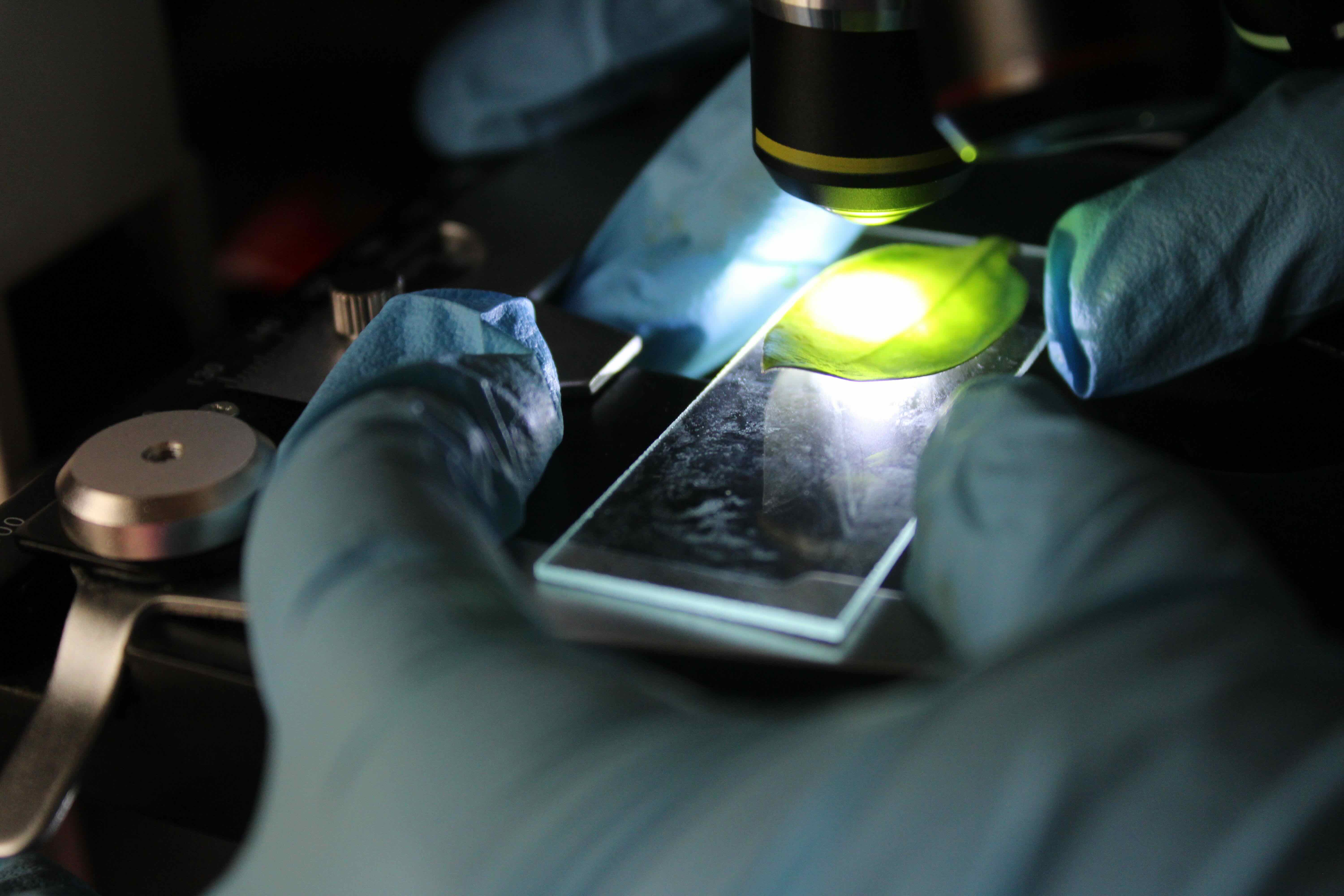
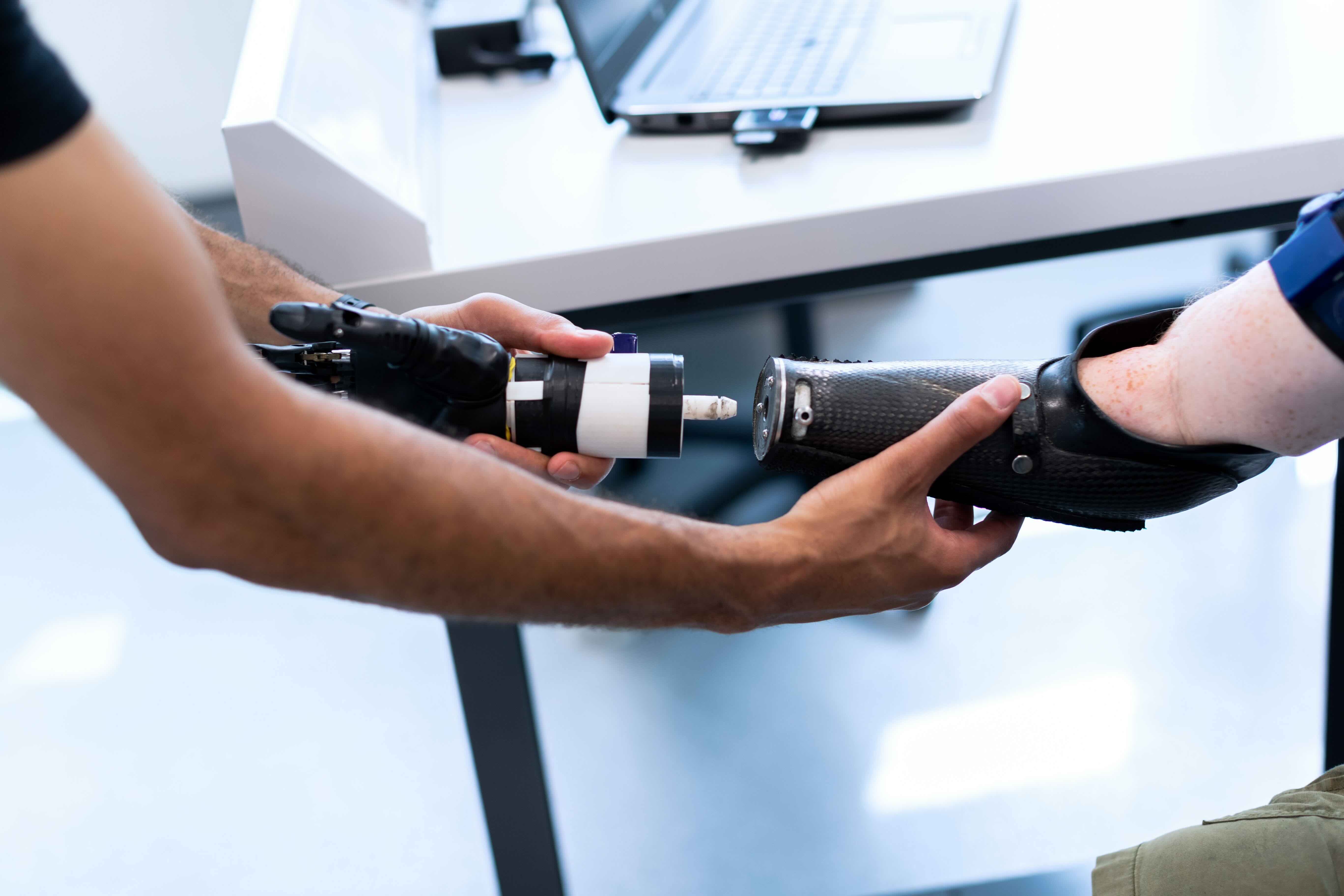
You can investigate how neurons respond to images through microscopy, recorded brain activity, or mathematical modeling. Neuroscience programs for high school students connect those questions with the equipment, data, and expertise to pursue them. The right experience gives you a defined scientific contribution and a mentor who helps you understand what your results mean.
At Echelon Scholars, we help students develop ambitious original research through individualized technical guidance, detailed feedback, and sustained mentorship. University laboratory placements provide direct exposure to neuroscience and to experimental work, while computational mentorship can support a longer investigation with existing neural data.
Laboratory research develops practical skills and lab techniques through supervised experiments, experimental setups, imaging, and measurement. Computational research uses code, statistics, or mathematical models to investigate the brain and nervous system in health and disease. These approaches often overlap: analyzing recordings from a neuroscience lab is computational work grounded in an experiment.
An internship usually gives you responsibility within a mentor’s existing project. An individually mentored study can give you more room to develop your own question. A research-oriented course adds structured teaching and assigned methods, so students learn about the brain in a set sequence. Each builds different capabilities; original research requires a defensible investigation whose answer is not already supplied by the exercise.
Summer research programs are the most common of these, and a neuroscience summer program is limited by how many students one laboratory can supervise. High school students interested in neuroscience should check prerequisites too, since the universities and institutes that offer neuroscience places differ in what they ask for. Research experiences vary just as much in how much of the thinking is yours.
Our research mentorship program supports technically grounded projects across data science, AI, biology, applied mathematics, and medical research. A neuroscience-related computational project fits when the question, accessible data, and mentor expertise align. You choose your topic after reviewing the literature with your mentor, then develop the analysis and manuscript through successive rounds of feedback.
Unlimited-hour, one-on-one mentorship makes room for debugging, methodological revision, and careful interpretation. Tuition is $12,500 in two installments, with competitive need-based aid of 10–50%. With continued participation, mentorship and publication support continue at no additional tuition until acceptance by a peer-reviewed, postgraduate-level journal or conference. This is a remote computational route, not access to a wet lab.
Duke University Neuroscience Experience pairs students with research laboratories for eight weeks of full-time summer research. Individual scientific mentorship, a stipend, and a final research presentation accompany the hands-on work. Prior research experience is not required.
For its 2026 cohort, DUNE admitted sophomores and juniors from designated Durham public or charter high schools who were 16 years or older at the start and could attend as commuter students. Applicants needed U.S. citizen, national, permanent-resident, or legal-resident status. Its local-school requirement makes geography central to access.
MPFI’s six-week internship offers distinct routes into brain research. The neuroscience track involves lab work with methods such as staining and microscopy, while scientific programming focuses on software for analyzing complex data. Biology and chemistry support the former; mathematics and programming support the latter. Interns develop presentations and an abstract of their research.
The 2026 eligibility rules required students to live and attend school in Palm Beach or Martin County, enter junior or senior year, be at least 16 by the start, and have U.S. work authorization. This paid, full-time experience requires daily on-site participation.

BRAINYAC connects students with Columbia neuroscientists for mentored laboratory projects. Research is embedded in an active scientific environment, giving students experience with experimental work and how a question develops through collaboration.
Eligibility requires NYC residency, grade 10 or 11, and participation in S-PREP, BioBus, Lang Youth Medical, Columbia Secondary School, or Double Discovery Center. Preference goes to Upper Manhattan and South Bronx students. Applications for the 2027 program are closed; the anticipated next opening is October 2027 for the 2028 program.
The eight-week Stanford Institutes of Medicine Summer Research Program includes neurobiology among its research areas. Students work on medically oriented investigations with direct mentorship. The neurobiology route concerns research in a laboratory, distinct from SIMR’s separate bioengineering bootcamp.
For summer 2027, applicants must be juniors or seniors in fall 2026, be at least 16 when the program begins, and live and attend high school in the United States. Only U.S. citizens and permanent residents are eligible. Selection heavily favors Bay Area students, so local access matters even though eligibility is broader.
ASSIP offers faculty-mentored research across several fields, including neuroscience. A concrete 2026 neuroscience placement involved three-dimensional motion tracking of laboratory mice and data-driven behavioral analysis using Python or MATLAB. That placement was in person and required interns to be at least 16, demonstrating why a computational topic does not automatically mean remote access.
The broader program uses mentor-specific formats and culminates in a poster session. The application process for 2027 opens December 7, 2026, and closes February 12, 2027. Match your preparation and location to the actual placement rather than another department’s remote option.

The six-week RISE Practicum combines lectures and discussions with group research. Its 2026 Computational Neurobiology option linked summer neuroscience lectures with programming, modeling, and laboratory exercises. Students present at a poster symposium. This structured group model differs from developing an individual project with a dedicated mentor.
For 2027, RISE eligibility is limited to rising high school seniors entering senior year that fall, and to U.S. citizens or legal permanent residents. The specific 2027 Practicum subjects are due to be announced in December; Computational Neurobiology should not yet be treated as a confirmed 2027 offering.
Computational routes have widened research for high school students who cannot reach a laboratory. For an illustrative computational research project, consider the Allen Institute’s Visual Coding datasets, which include recordings of mouse neurons responding to visual stimuli. A student could ask how reliably a selected group of neurons distinguishes two stimulus conditions across repeated presentations.
Begin with a small, documented subset and a simple baseline. Compare two analysis methods using held-out trials, then examine whether the difference persists across recording sessions. Keep training and evaluation separate, and treat sessions or animals appropriately when assessing uncertainty rather than counting every neuron as an independent experiment.
A mentor can help choose suitable recordings, identify confounds, and connect numerical results to the biology and the neural mechanisms behind it. Originality might come from testing a neglected condition or characterizing a method’s failure, rather than building a larger model. The result would concern this dataset and experimental setting, not automatically human cognition or everyday human behavior. If you want to explore neuroscience before committing to a full study, take the opportunity to start with one dataset. Narrowing from broad neuroscience topics to one question you can answer this month is what turns an interest in neuroscience into research, and most scientific discovery starts that narrow.
For laboratory work, strengthen cell biology, experimental controls, and careful recordkeeping. For computation, practice loading data, making interpretable plots, and explaining variability before attempting advanced models. Our research process guide shows how to connect those skills to a focused question.
Bring a short analysis or a clearly explained scientific question to your application. If you want sustained individual support as that question becomes an original study, explore Echelon Scholars admissions. We look for motivation and readiness to learn, and help students turn feedback into stronger research decisions. Students aiming at a career in neuroscience or neurology gain most from work they can explain in detail when they apply to colleges and universities.
No. Some programs, including Duke DUNE, welcome beginners who meet their specific eligibility rules. Echelon Scholars also supports students without prior research experience through individualized instruction and feedback. Biology, quantitative reasoning, a strong interest in the subject, and a willingness to work through unfamiliar methods provide a useful starting point; an introduction to neuroscience and a working understanding of the brain make the first weeks easier.
Yes. Existing neural recordings and computational models can support original questions without collecting new biological samples. You need suitable data, sufficient computing resources, and a method matched to the question. Technical mentorship helps with data selection, evaluation, and biological interpretation.
Neuroscience courses include original research when students investigate a question with an uncertain answer through a defensible method. Coursework alone, or an assigned demonstration, is different. Examine the question you will investigate, decisions you will make, and evidence you will analyze, rather than relying on a neuroscience program’s name.
Duke DUNE’s 2026 cohort required attendance at designated Durham schools, and MPFI’s 2026 internship required living and attending school in Palm Beach or Martin County. Columbia BRAINYAC requires NYC residency and enrollment in a partner program or school. These are access conditions, not simply location preferences.
Depending on the program and project, high schoolers may produce an analysis, software, a poster, or a manuscript. A well-supported contribution explains its question, methods, results, and limits. Continued mentorship can help develop a preliminary study into a stronger paper and support revision through peer review.
About Echelon Scholars:
Echelon Scholars is a research mentorship program that pairs students with graduate-level mentors from Harvard, Stanford, and UC Berkeley. Our editorial team covers academic enrichment, research opportunities, and college preparation.