The Research Science Institute is held at the Massachusetts Institute of Technology (MIT) each summer and, beginning in 2027, at Stanford University. RSI is a free six-week summer research program for high school juniors, and its application gives you room to show how you think about a scientific problem, what you have learned, and what you want to investigate next. The strongest preparation is concrete: challenging coursework, sustained exploration, and experiences you can explain clearly. For the 2027 program, applications close December 11, 2026, at 11:59 p.m. Eastern Time.
At Echelon Scholars, we help students build that depth through individualized technical guidance and original research. For RSI, your task is to describe your own preparation accurately and make a specific case for the questions that interest you.
The Research Science Institute is a selective, six-week residential STEM research program for high school students, sponsored by the Center for Excellence in Education, or CEE. The nonprofit, founded in 1983, supports high school and university scholars who are headed for leadership in science, technology, engineering, and mathematics. It describes RSI as a summer science and engineering program that combines classes on campus with research placements in science and technology.
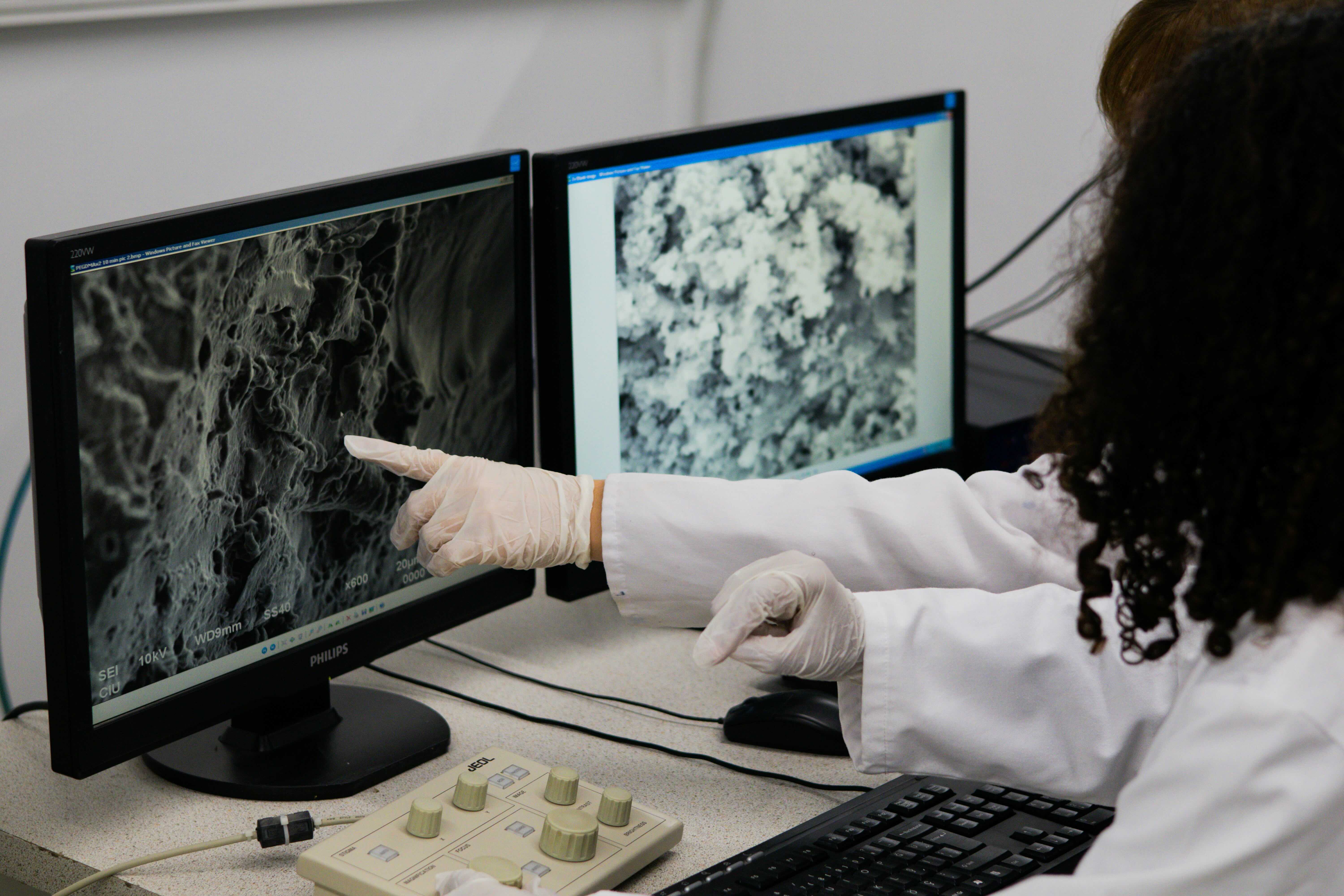
According to the program page, “participants experience the entire research cycle from start to finish.” RSI scholars spend the first week in intensive STEM classes taught by professors. A five-week research internship follows, in which students conduct individual projects under mentors who are experienced scientists and researchers. Each student reads the current literature in the field, then writes and carries out a research plan. In the final week of RSI, students prepare written reports and give oral presentations on their research. The experience develops scientific reading, investigation, analysis, and communication.
The 2027 sessions run June 20–July 31 at MIT and June 27–August 7 at Stanford. RSI brings together 100 students for the session hosted at MIT and 50 for the Stanford session. One application lets you indicate campus preferences, although placement is not guaranteed. Students participating in RSI must commit to the full residential session without concurrent courses, internships, or employment.
RSI admits students who have completed the equivalent of three years of high school and will enter their final year of secondary school after the summer program. In the U.S., students apply in the middle of grade 11 and expect to graduate in 2028. Sophomores and high school seniors are not eligible. The eligibility FAQs also specify a minimum age of 16 by July 1 of the program year. Public-school, private-school, and homeschooled students are eligible under the applicable requirements.
U.S. citizens and permanent residents use the domestic application. International applicants should follow CEE’s country-specific application guidance because participating countries may use their own selection process. If your school trajectory differs from the usual junior-year timeline, obtain an explicit exemption from CEE before treating yourself as eligible.
Attendance is cost-free, including room and board. Application processing is separate: the domestic fee is $75 and the international fee is $35, with waivers available on timely request. Requesting a waiver early gives you time to complete the remaining materials before the deadline.
The 2027 application preview organizes academic preparation, activities, research experience, personal statements, and references into distinct sections. Build a private checklist around the following materials.
Choose recommenders for what they have observed. A teacher who watched you refine a mathematical argument can offer useful evidence of persistence and reasoning. Give each recommender a concise account of your interests and shared work, then track submission status in SlideRoom. The transcript uploader is not a fourth recommender.
The application asks for two substantively distinct research fields and a subfield within each. For each subfield, identify one or two questions that interest you and explain the preparation behind that research interest. Two labels for essentially the same topic do not provide the breadth requested.
Consider an illustrative student interested in environmental science and applied mathematics. After a school project on local temperatures, they might become curious about how tree cover relates to heat across neighborhoods. In mathematics, they might explore how different assumptions change a model’s predictions. These are starting points for investigation, not claims that the student has already solved either problem.
The useful preparation is to read relevant work, understand what measurements or models could address the question, and identify what remains unclear. A mentor can help you distinguish a testable relationship from a broad ambition and recognize where your current skills need strengthening. Our research process guide explains how to develop that foundation.
Describe completed work precisely. Separate your contribution from your supervisor’s guidance, and distinguish a submitted manuscript from an accepted or published paper. RSI does not require or expect prior research experience or publications, so students without formal research behind them can draw on classroom investigations, independent study, and technical projects for meaningful evidence to discuss.
The personal statements cover research interests, long-range goals, meaningful activities or hobbies, community involvement, and your reasons for applying to RSI. Each response should add a different part of your story. Avoid repeating your activity list in every answer.
Before writing, make notes about a few experiences you remember clearly. What question caught your attention? What did you try? What changed after feedback or an unexpected result? What would you investigate next? Select the experiences that actually answer the prompt, then write your response yourself.
For example, a robotics student might reflect on discovering that a sensor behaved differently under changing light conditions. The valuable detail is how they diagnosed the problem and revised their testing, rather than a generic claim that robotics taught perseverance. Treat this as an illustration of reflection, not text to borrow.
RSI prohibits generative AI from writing or rewriting applicant responses. Human proofreading and editorial advice are allowed, as are spelling, grammar, and punctuation tools, but the ideas, organization, wording, and expression must remain yours. Ask a reader to identify unclear reasoning or missing context rather than supply a replacement essay.
If you are applying this cycle, prioritize the work already available to you. Revisit a project notebook, reproduce an analysis, or explain a paper’s main result and limitations to a teacher. Those exercises reveal what you understand and where a focused question would help. They also make your technical-skills descriptions more accurate. Save the exact versions of your figures and code so your explanations remain reproducible.
For students planning further ahead, sustained research mentorship can provide a deeper sequence of practice. At Echelon Scholars, our unlimited-hour, one-on-one mentorship supports students conducting original research across the entire research process, from topic development to manuscript submission, with continued publication support. Detailed feedback, technical iteration, and accountability help you build work you can understand and defend.
Start with our research process guide to map your next learning step. If you want individualized support for an ambitious original project, explore our admissions process. Your research development can continue across the school year, independently of a single summer-program decision.

The application closes December 11, 2026, at 11:59 p.m. Eastern Time. Late applications are not considered. International applicants using a national selection process should also meet that process’s requirements and deadlines.
The Center for Excellence in Education does not publish an acceptance rate. Estimates on other admissions sites range from under 2% to about 5%. The number of places is public: 150 across the two campuses for 2027.
No. RSI does not require or expect prior publications. Research mentorship can still help you develop technical understanding and sustained inquiry, but you can apply with evidence from coursework, independent learning, and other substantive projects.
The 2027 application requests three recommenders, including at least one current secondary-school STEM teacher. A separate school official uploads the transcript. Choose people who know your academic, extracurricular, or research work well.
You can state a campus preference in the 2027 application and explain it. CEE considers that preference but does not guarantee it, and an applicant receives at most one invitation.
No. RSI students are assigned projects in light of their interests and preparation rather than carrying over an existing project. Describe your research background to show what you have learned and the new questions you are ready to explore.
About Echelon Scholars: Echelon Scholars is a research mentorship program that pairs high school students with graduate-level mentors from Harvard, Stanford, and UC Berkeley. Our editorial team covers academic enrichment, research opportunities, and college preparation.