The Stanford Center for Artificial Intelligence in Medicine and Imaging (AIMI) at Stanford University runs a clear progression of programs for students interested in the intersection of artificial intelligence and medicine. The current lineup includes two-week virtual summer programs, an invitation-only academic-year internship for alumni, expert webinars, and a continuation track for eligible returning participants. The important distinction is depth: a short summer session can build foundations and introduce collaborative projects, while sustained research develops through later, selective stages.
That program structure helps families choose the right entry point without treating every offering as the same kind of research internship. It also prevents a common misconception: completing a summer session does not automatically place a student in the academic-year internship, continuation track, or publication process.
AIMI currently presents four ways to engage. The Summer Health AI Bootcamp is designed for students across technical backgrounds and introduces the fundamentals of AI in healthcare. The research internship puts students with strong math preparation and coding experience on team projects that use real-world health data and raise both technical and clinical questions. Both run online, and students who successfully complete either one receive a Certificate of Completion from AIMI.
AIMI also runs NextGen Tech Talks, live expert webinars that provide a lighter-touch way to learn about current work and career paths. Alumni of either summer offering may later be invited to apply for the AIMI Academic Year Research Internship, a roughly 30-week, small-team experience. Eligible returning participants may then pursue the Research Continuation Track.
The bootcamp is the more accessible starting point for students who want to understand how AI and medicine fit together before committing to a deeper project. AIMI requires no prior coding experience and points students who are new to programming toward this option. Its lectures, guided exercises, and collaborative activities can help a student learn the vocabulary of models, data, clinical context, and model evaluation.
The likely output is stronger conceptual and practical readiness, not an individual manuscript. A student should use the experience to identify which problems feel compelling, note the skills that still need work, and document any collaborative exercises or presentations. That evidence can support a future application, but it does not guarantee progression to the academic-year program.
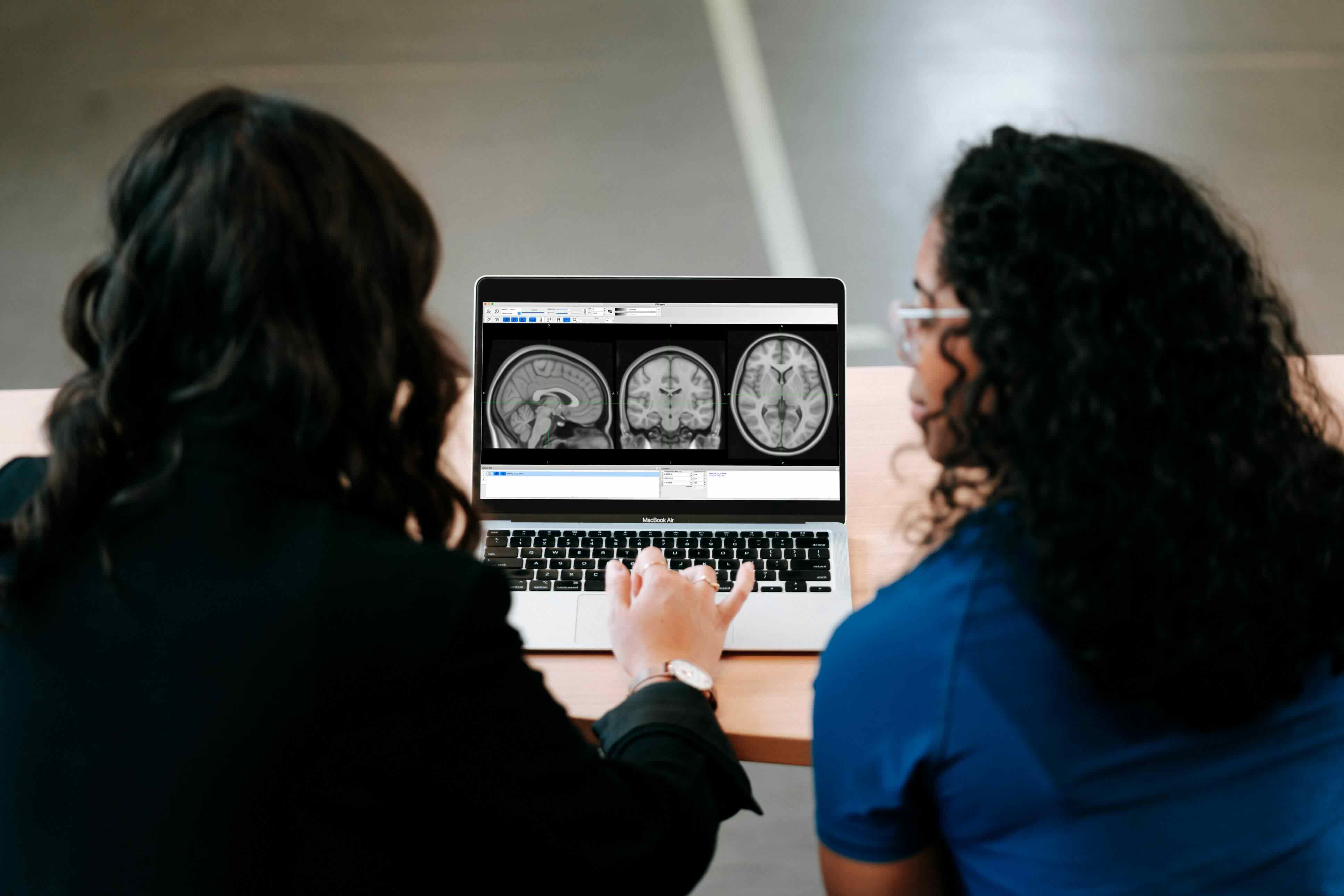
The summer internship is the stronger fit for students ready to apply technical skills to health data. Students work in small teams, with guidance from Stanford mentors throughout the program, on hands-on research projects built around medical datasets. Technical lectures from Stanford researchers and clinicians, a speaker series, and collaborative research sessions fill the rest of the schedule, which runs Monday through Friday from 9:00 AM to 1:00 PM PDT. The two-week format creates an intensive introduction to research practice: framing a question, working with real-world data, interpreting results, and communicating within a team.
Two weeks is enough to test methods and learn how the research process works, but it is not the same as completing mature independent research. Families should evaluate the internship by its project experience, mentor access, and technical learning rather than assume every participant produces a publishable paper. A concise project presentation, analysis, or team deliverable is a meaningful summer outcome.
For summer 2027, applications for both programs open November 10, 2026. The financial aid application is due January 15, 2027, and the standard application deadline is February 1, 2027. AIMI expects to send decisions by the end of March. The free information session is open to students and parents and runs online the evening applications open, from 5:00 to 6:00 PM Pacific, covering the curriculum, the student experience, and the application process.
The 2027 program runs in two sessions, June 14–25 and July 12–23, and each program admits about 100 students across both. Both are open to U.S. and international students entering grades 9 through 12 in fall 2027. The internship requires strong computer programming skills, an unofficial transcript, and a recommendation from a teacher, research mentor, or counselor. The bootcamp requires none of the three.
Tuition is $3,000 for the internship and $2,500 for the bootcamp. Need-based financial aid, partial or full, is available to eligible students living in the United States. Accepted students have 48 hours to confirm and pay, and tuition is non-refundable, so families should check both session dates before applying.
The 2026–27 academic-year internship runs from September through May in a virtual format, with an optional in-person capstone at Stanford. It is open by invitation to alumni of either program who remain enrolled in high school, and applicants need a recommendation from their AIMI summer mentor. Admission is limited by project and mentorship capacity, and applications for the current academic year are closed.
Interns join small teams with Stanford students, researchers, and faculty on meaningful projects at the intersection of AI and health. Areas may include medical imaging, clinical decision support, bias and fairness, healthcare operations, responsible AI, and other emerging applications of AI in medicine. Depending on the project, they may analyze data, develop and evaluate models, conduct literature reviews, examine implementation questions, and contribute to scientific writing or presentations. The longer research program provides opportunities for regular mentorship and expert sessions across approximately 30 weeks.
The academic year culminates in research presentations and written deliverables. Students who complete the program are invited to an optional capstone during Stanford Health AI Week, where they may present a poster and connect with the Stanford AIMI community. These are substantial outputs, but the official page does not promise that every project becomes a publication.
The Research Continuation Track is for eligible returning academic-year participants who want to deepen work begun during their first year. Students take greater ownership of the direction and analysis while remaining connected through structured mentorship, expert programming, and cohort activities. Depending on progress, an expanded study, abstract, poster, or manuscript may be an appropriate goal.
This sequence matters: summer alumni may be invited into the academic-year internship, and eligible returning participants may continue further. Each stage has its own selection point. A student who wants sustained research should still build skills and seek other routes if an AIMI continuation invitation is not available.
A useful preparation plan combines Python, statistics, and health context. Students can practice cleaning tabular data, interpreting a confusion matrix, separating training from testing data, and explaining why an accuracy result may hide uneven performance across patient groups. Reading one medical-AI paper each week also helps students recognize how a research question connects clinical need, data, method, and evaluation.
Mentorship becomes especially valuable once a student moves beyond a guided summer project. At Echelon Scholars, students receive unlimited-hour, one-on-one guidance through question development, technical iteration, analysis, manuscript writing, and the peer-review process. The student develops and carries out the work; the mentor provides instruction, detailed feedback, and accountability across a project-paced timeline.
Lukas Chung's biomedical machine-learning project illustrates that depth. He studied how signal quality affected ECG diagnostic classification using the PTB-XL dataset, investigated class-specific effects and a loss-reweighting pitfall, and developed the work through repeated technical revisions. His paper was accepted to the IEEE International Conference on Bioinformatics and Biomedicine. The example is useful because sustained progress came from methodical analysis and revision, not from treating an initial model as the finished research.
The bootcamp is the clearer starting point because AIMI designed it for students across technical backgrounds. A student with stronger coding, mathematics, or health-project experience may prefer the internship's team-based data work. Choose based on current readiness and the type of output you want, not on the word internship alone.
No. Students pay tuition, $3,000 for the internship and $2,500 for the bootcamp, and neither option carries academic credit. Need-based aid is available to eligible students living in the United States.
Yes. AIMI allows students to apply to both, but an admitted student may enroll in only one and attend only one session per summer.
No. The academic-year internship is invitation-only for summer alumni, with admission limited by project and mentorship capacity. Summer participation can establish useful preparation and a connection to AIMI, but progression remains selective.
Publication is possible only when a project develops far enough and is suitable for submission; it is not a universal program output. The academic-year program promises presentations and written deliverables, and the continuation track may support an abstract, poster, manuscript, or expanded study depending on progress.
Build a small Python analysis, review basic statistics and machine learning, and learn to explain one health problem you care about. Be ready to describe what you did, what failed, and how you evaluated the result. Focused evidence of curiosity and technical follow-through is more useful than a long list of disconnected activities.
A longer one-on-one mentorship can help a student turn an interest in health AI into an original, feasible question and carry it through analysis and manuscript development. Echelon Scholars is relevant when a student wants individualized technical feedback and continued support beyond a fixed summer schedule, provided the project fits the student's skills and available mentor expertise.
About Echelon Scholars: Echelon Scholars is a research mentorship program that pairs high school students with graduate-level mentors from Harvard, Stanford, and UC Berkeley. Our editorial team covers academic enrichment, research opportunities, and college preparation.