
From First-Time Researcher to IEEE Acceptance: Avantika’s Journey in PhD-level Research
“It was so guided, but I also had the freedom to choose my own topic. Everything was tailored to me and my research.”
About the Research
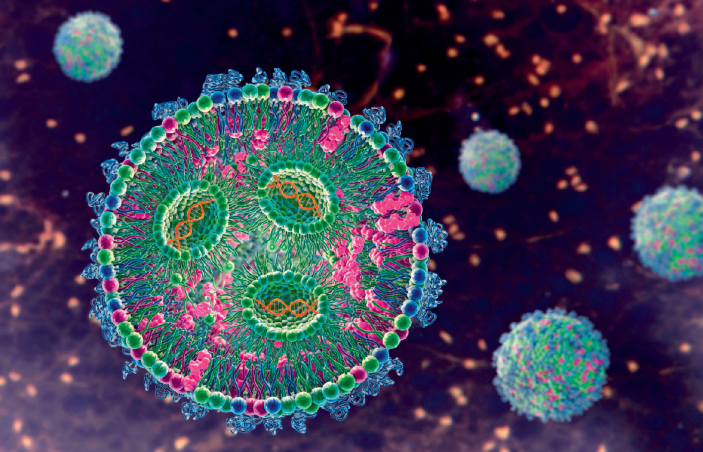
Avantika explored whether machine learning could identify lipid nanoparticle components from nuclear magnetic resonance (NMR) spectra. Using 14 spectra across four component classes, each represented by 600 chemical-shift features, she compared a principal component analysis and support vector machine pipeline against a one-dimensional convolutional neural network. The PCA and SVM approach achieved 92.9% leave-one-out classification accuracy, compared with 21.4% for the CNN, with preprocessing refitted inside each validation fold.
Her project connected machine learning with the analysis of lipid components used in drug-delivery systems. It investigated how a simpler, lower-dimensional model could outperform a neural network in a small-sample setting, highlighting the importance of matching computational methods to the available data.
Beginning with no prior research experience, Avantika worked through literature review, topic development, dataset preparation, model building, evaluation, and scientific writing. Throughout the process, she combined individualized mentor support with the freedom to pursue her own research interests. Her completed full-length paper was accepted to IEEE ETECOM 2026.
In the Scholar’s Words
What was the most challenging part of beginning your first research project?
“I would definitely say ideation and getting started. I had never done research before, so the process initially felt daunting. Reading papers, working through the literature, and coming up with an original idea took time. Finding novelty beyond the existing state-of-the-art research was especially challenging. But once I started narrowing down the specific areas that interested me, the process became much more engaging.”
What became your favorite part of the research?
“My favorite part was the technical work, especially building the model and seeing its outputs. I really enjoyed working with the data, looking at the graphs, and seeing the results of what I had built. That was the part of the research I found most exciting.”
How did your mentors guide you through the different stages?
“My mentors helped me at every step, from developing the idea and reviewing existing research to working with the dataset, building the models, and writing and submitting the paper. The process was very guided, which was especially helpful because this was my first research experience. I always had people I could turn to when I needed support.”
What did you appreciate most about the availability of that support?
“I could reach out whenever I had questions and get detailed responses very quickly. We could meet frequently, including on weekdays and weekends, so I felt that I had consistent support throughout the process. Being able to ask questions as they came up and get help when I needed it was something I really appreciated.”
How did the mentorship help when you encountered difficult technical or writing questions?
“While I was building the model, my mentors helped tremendously with the technical details. My paper focused on a very specific topic, so having someone who could help me work through those details was really valuable. The support was also helpful when I started writing the paper and needed to explain the research clearly. Since I had never done this before, having that guidance throughout made a big difference.”
How did you feel when your paper was accepted to an IEEE conference?
“I was very happy. One of my goals was to have my research accepted to a postgraduate-level venue, so reaching that point felt like a wonderful conclusion to all the hard work I had put into the project. It was exciting to know that I had completed research at that level and would have the opportunity to share it with a wider community of researchers.”
How do you think this experience will support your future academic and career goals?
“I think it will help me a lot. Research requires perseverance and the ability to work through difficult technical challenges until you have a finished product. Those are exactly the kinds of skills I want to develop for the careers I am interested in. Having gone through this process now gives me experience that I can carry into future academic work and other challenging projects.”
What would you tell another student considering Echelon Scholars?
“I would say it was unlike any other experience I have had because it was so student-centered. The focus was on me as a researcher, my topic, and what I could gain from the process. Everything felt tailored to my interests and the work I was doing. I had a lot of guidance, but I also had the freedom to choose my own topic and direction. That combination made it a really valuable experience.”
