
From Technical Exploration to Novel Research: Arnav’s PhD-Level Research Journey
“Going from early experiment results to a fully revised, submission-ready paper taught me how much rigor real research writing demands.”
About the Research
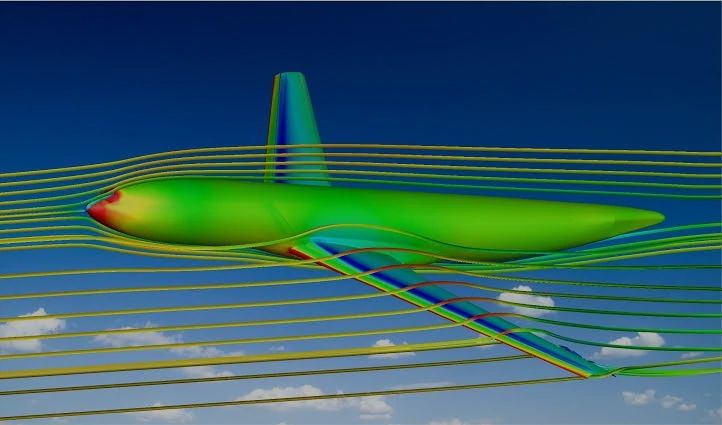
Arnav investigated how a machine-learning model reconstructs detailed turbulent flows from lower-resolution data, uncovering a case in which artificial spikes reduced apparent spectral error by up to 88% without improving the underlying reconstruction. His paper documented this failure in a specific network and flow configuration and developed checks to distinguish misleading numerical gains from improvements in the model’s predictions.
The project required repeated model development, lengthy experiments, and careful interpretation of results. Its central contribution went beyond pursuing a better performance score: Arnav examined what the numbers actually showed and whether they supported the conclusions being drawn.
Through Echelon Scholars, he developed the work into a full research paper through sustained technical effort and multiple rounds of writing and revision. The experience strengthened both his approach to research and his interest in pursuing engineering, further research, and startups.
In the Scholar’s Words
Question - What was the most challenging part of your research?
Arnav Answer - “Getting the model right was probably the hardest part. There were multiple versions and a lot of iteration, including a long stretch when the accuracy wasn’t improving the way I wanted. I had to look more closely at other aspects of the results, including spectral error, and keep thinking about where the research contribution could come from. Working through that took a lot of trial and error, along with support from my mentor.”
Question - What was the most rewarding part of the technical work?
Arnav Answer - “My favorite part was finishing the technical phase. It had been quite demanding, so getting the experiments completed, collecting the numbers, and saving all the data felt like a major milestone. After spending so much time working through different versions, it was exciting to have the results together and be able to move forward with the paper.”
Question - How did your mentor support you throughout the process?
Arnav Answer - “My mentor supported me throughout the research, from answering technical questions to helping me frame the paper. I learned that there are very specific expectations for how advanced research should be explained and presented. Having guidance on both the technical work and the structure of an IEEE-style paper helped me understand how to turn my experiments into a complete research contribution.”
Question - What did you value most about working with your mentor?
Arnav Answer - “I really appreciated how responsive he was. When I emailed a question, I would hear back quickly, and we could work through things in meetings when needed. That helped me keep a clear timeline and stay focused on the work. The support was hands-on, and I knew I could ask for help when I needed it.”
Question - How did the feedback and revision process improve your writing?
Arnav Answer - “Going from early experiment results to a fully revised, submission-ready paper taught me how much rigor real research writing demands. My mentor pushed back on my drafts round after round, which made me take the writing more seriously and keep improving it. The final version was stronger than anything I could have written alone.”
Question - How did you feel when you learned that your paper had been accepted?
Arnav Answer - “I was very happy and excited. I had been nervous while waiting for the result, so hearing that the paper had been accepted was also a huge relief. It felt like all the work I had put into the experiments, writing, and revisions had come together. Reaching that milestone as a high school student meant a lot to me.”
Question - What did you gain from the experience beyond the completed paper?
Arnav Answer - “Working with Echelon and Pranav pushed me to take my research seriously in a way I hadn’t before. The process shaped how I think about my academic direction, and our conversations about research and future plans gave me a clearer sense of where I want to take this. I came away with both a paper and a better understanding of the kind of work I want to pursue.”
Question - How do you hope to use this experience in your future career?
Arnav Answer - “I’m interested in engineering, research, and startups, and this experience gives me a foundation for pursuing those areas. Having a completed paper gives me something concrete to show for the technical work I’ve done. More importantly, I now understand a research process that I can apply again when I take on new projects and opportunities.”
Question - What would you tell another student considering Echelon Scholars?
Arnav Answer - “I would definitely encourage them to do it. You learn a lot by actually doing the research and working through the challenges yourself. It gives you a starting point for entering the technical and research space, and the value goes beyond one paper. Once you’ve learned how the process works, you can carry that experience into future research and your career.”
